Get free quotes from calibration services near you
Takes about a minute. Free, no obligation; providers reply to you directly.
The first time I sent a temperature probe in for calibration, I expected to get it back with a sticker and a vague thumbs-up. What I got back was a 12-page document I didn’t understand, full of tolerance tables, traceability chains, and reference to standards I’d never heard of. My immediate thought was: what exactly did they do to this thing for three days?
Turns out, quite a lot. And once you understand the process, you start to realize how much invisible work sits between “we measured something” and “we’re confident that measurement is correct.”
The Short Version:A calibration laboratory compares your instrument against a reference standard with known, traceable accuracy — documents every deviation — and either adjusts the instrument or tells you exactly how far off it is. The certificate you get at the end is the paper trail that proves your measurements are defensible. It’s not magic. It’s methodical.
Key Takeaways:
- Calibration isn’t a pass/fail test — it’s a documented comparison against a traceable reference
- ISO/IEC 17025 accreditation is what separates a credible lab from a guy with a calibrator in a garage
- Certificates must document measurement uncertainty, not just a “pass” stamp
- Labs typically store your calibration records for a minimum of 10 years for audit purposes
What “Traceability” Actually Means
Here’s what most people miss: calibration isn’t about making your instrument perfectly accurate. It’s about knowing how accurate it is, and being able to prove that knowledge leads back to a national or international standard.
That chain — your instrument → lab reference standard → national metrology institute (like NIST in the US) — is called a traceability chain. Every link has to be documented. Break the chain anywhere and the certificate is worthless for a serious audit.
This is why ISO/IEC 17025 accreditation matters. Labs with that credential have been independently assessed on everything from their reference standards and environmental controls to how their technicians are trained. Accreditation bodies like A2LA and NVLAP publish scope certificates listing exactly which parameters and measurement ranges a lab is authorized to calibrate. If your lab can’t show you their scope, that’s a red flag.
A Typical Engagement, Start to Finish
Booking and intake. You contact the lab, describe what you’re sending (instrument type, manufacturer, model, serial number), and agree on scope. A good lab will ask what you’re using the instrument for — calibrating a pressure gauge used in pharmaceutical batch records has different tolerance requirements than one monitoring a HVAC system.
Shipping or pickup. Labs like Fox Valley Metrology offer pickup and delivery in addition to drop-off, which matters if you have fragile or sensitive equipment. Some labs — particularly those serving aerospace and heavy manufacturing — send technicians onsite so your equipment never leaves the production floor.
Pre-calibration functional check. Before anything else, a technician verifies the instrument is working. Damaged, malfunctioning, or visibly abused equipment gets flagged before calibration begins. Calibrating a broken instrument is pointless — and a legitimate lab won’t do it without noting the condition.
The calibration itself. The technician applies known, reference-traceable inputs to your instrument and records what your instrument displays. The difference between what it should read and what it does read is the deviation. Labs measure this across the full range of the instrument — not just at one point — because linearity matters. An instrument might be dead-on at 50% of its range and off by 2% at the extremes.
If the deviation falls outside your required tolerance, the lab adjusts the instrument (if it’s adjustable) and re-measures. If it can’t be adjusted to meet spec, it gets an out-of-tolerance finding with the actual deviation documented. That finding is also valuable — it tells you whether to scrap the instrument, restrict its use, or apply a correction factor.
Documentation and certificate issuance. This is where the lab earns its fee. The calibration certificate documents: the instrument ID, the reference standards used (with their own calibration dates and traceability), environmental conditions during calibration, before-and-after readings, measurement uncertainty, and the technician’s signature. Atlas Copco stores these records for a minimum of 10 years — which is standard practice for any lab serving regulated industries.
Reality Check:A certificate that just says “calibrated — pass” with no data is nearly useless for a serious quality audit. ISO 9001 and AS9100 auditors will ask to see the actual deviation data and measurement uncertainty. If your lab doesn’t provide that, you’re getting a sticker, not a calibration.
What Equipment They’re Actually Using
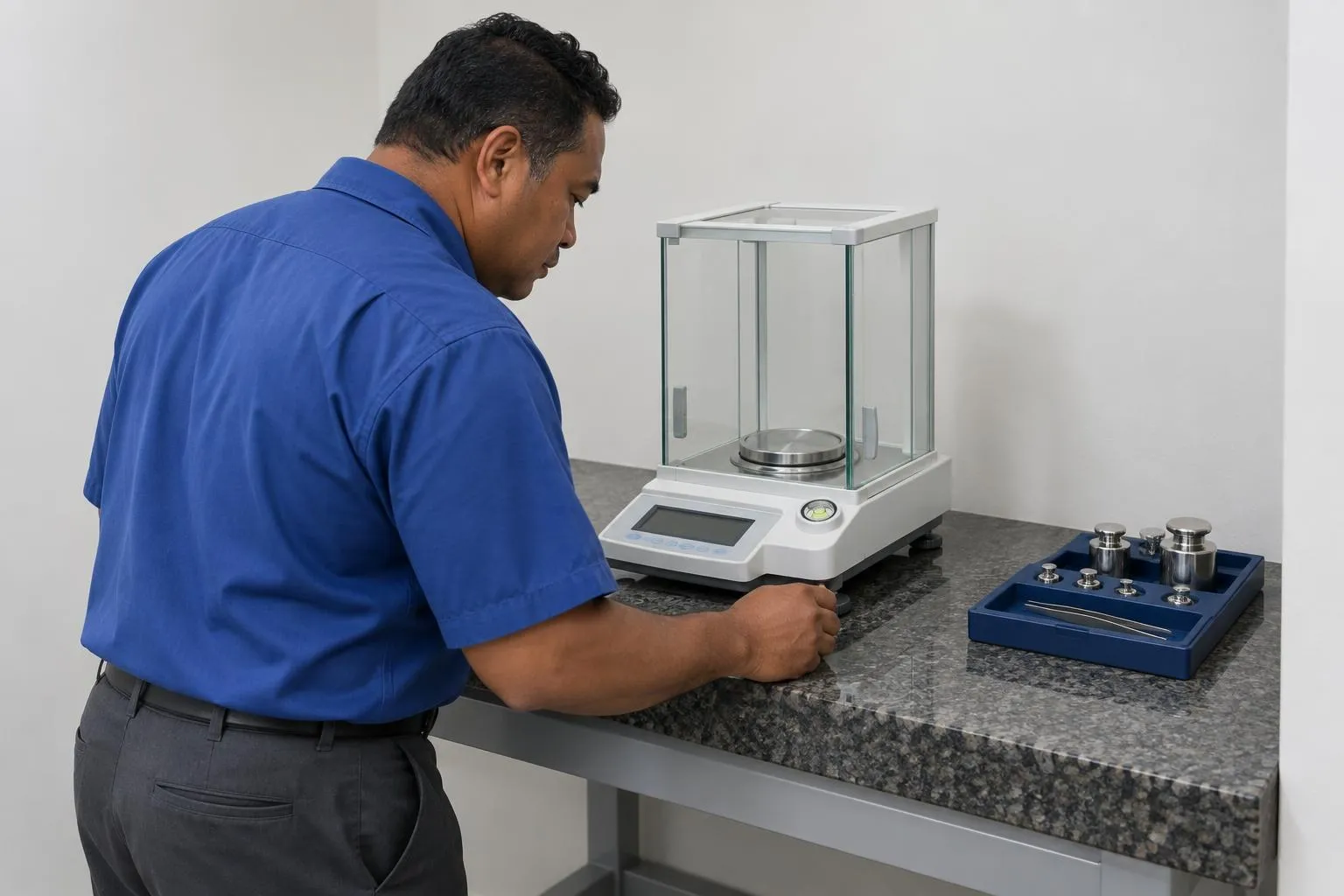
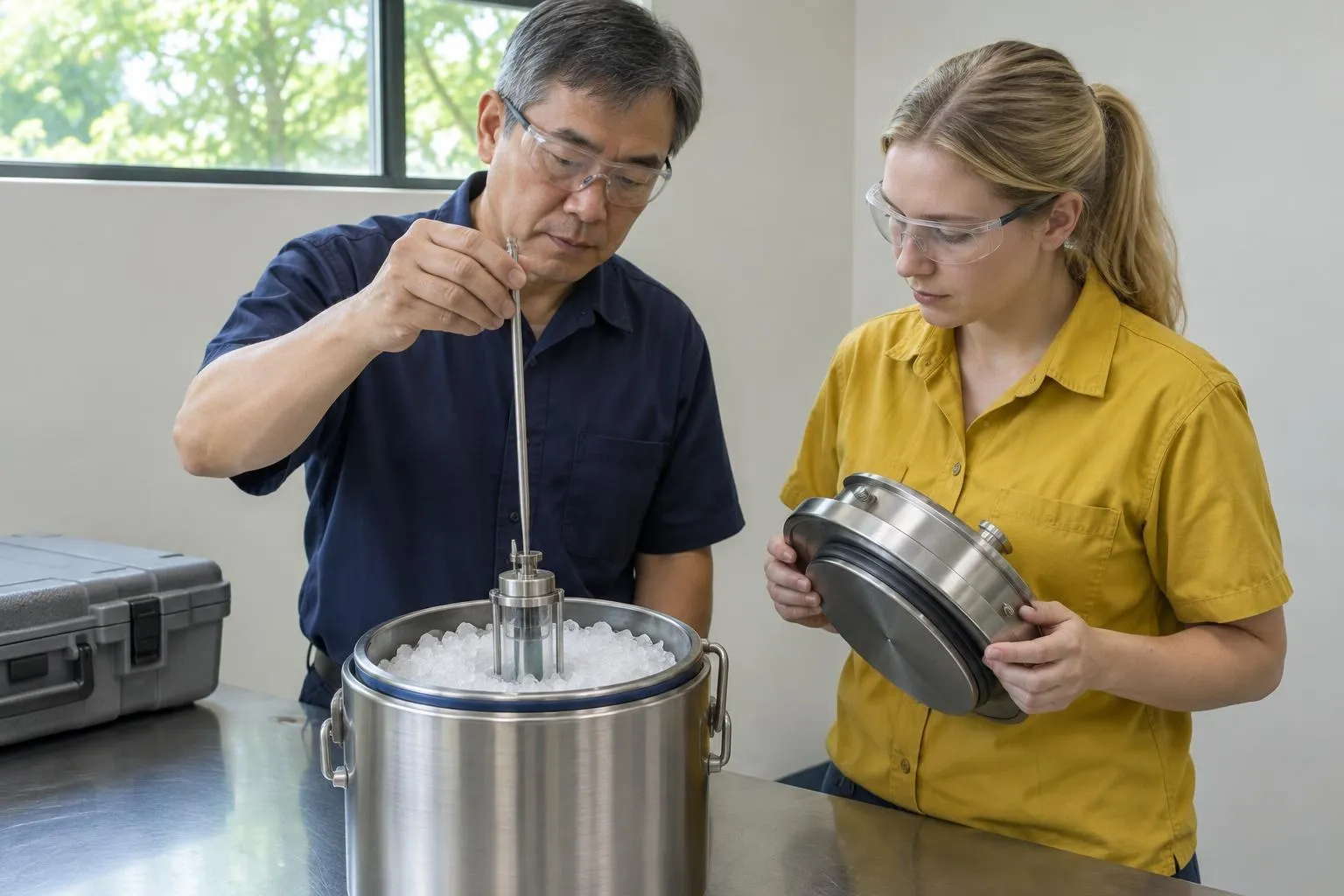
The lab’s reference standards are almost always more accurate than what you’re sending them — typically by a 4:1 accuracy ratio or better. For electrical calibration, that means multifunction calibrators traceable to NIST. For dimensional work, gauge blocks, laser interferometers, and coordinate measuring machines. For thermal calibration, dry-well calibrators and precision resistance temperature detectors with sub-millikelvin stability.
The lab environment matters too. Temperature, humidity, and even vibration are controlled and logged. A dimensional calibration done in a room that swings 10°F during the workday is not a serious calibration.
| Calibration Type | Typical Reference Equipment | Common Applications |
|---|---|---|
| Electrical | Multifunction calibrator (Fluke 5520A, etc.) | DMMs, oscilloscopes, clamp meters |
| Dimensional | Gauge blocks, CMMs, laser interferometers | Calipers, micrometers, height gauges |
| Thermal | Dry-well calibrators, PRT references | Thermocouples, RTDs, thermometers |
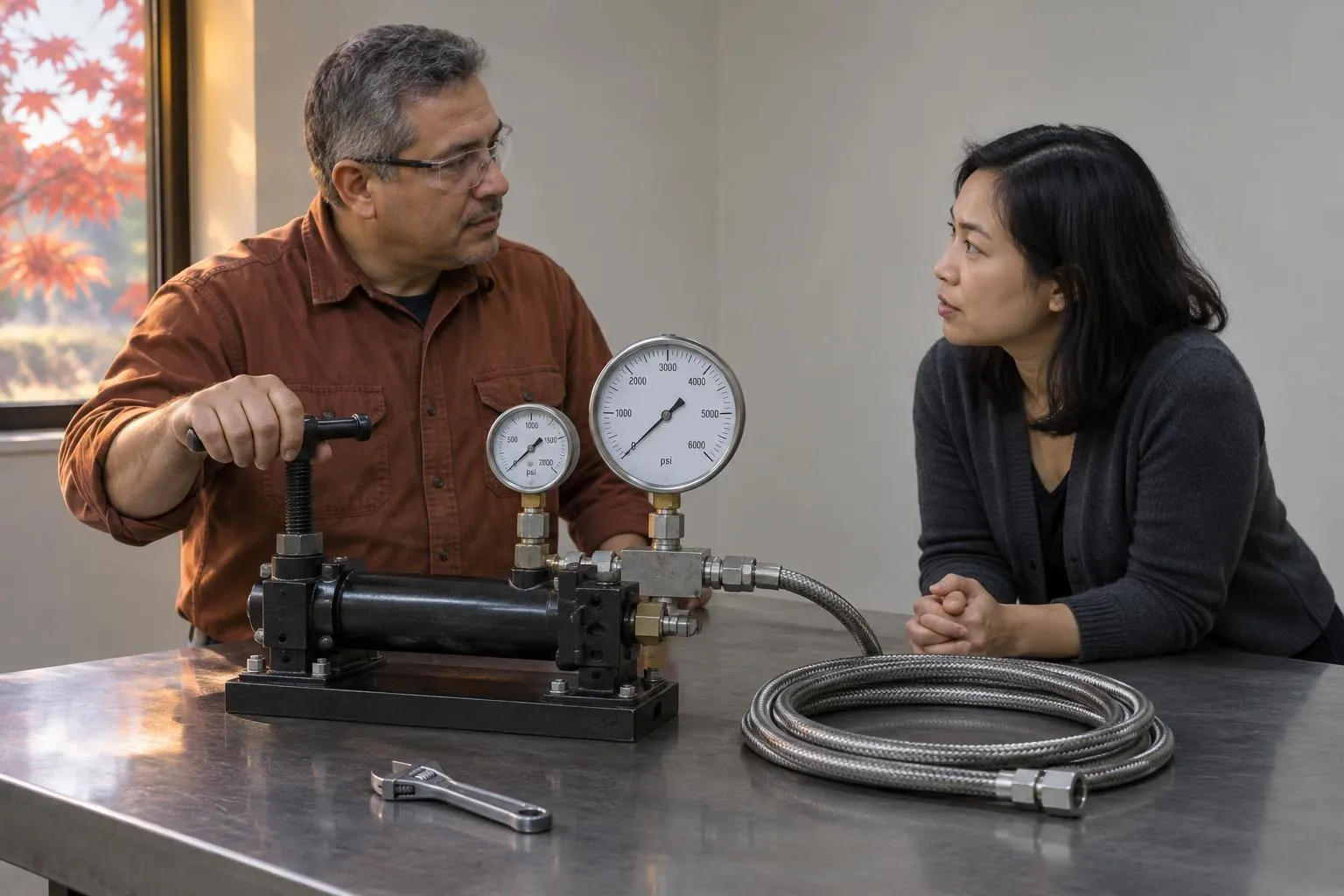
| Pressure | Deadweight testers, digital reference gauges | Pressure gauges, transducers, manometers |
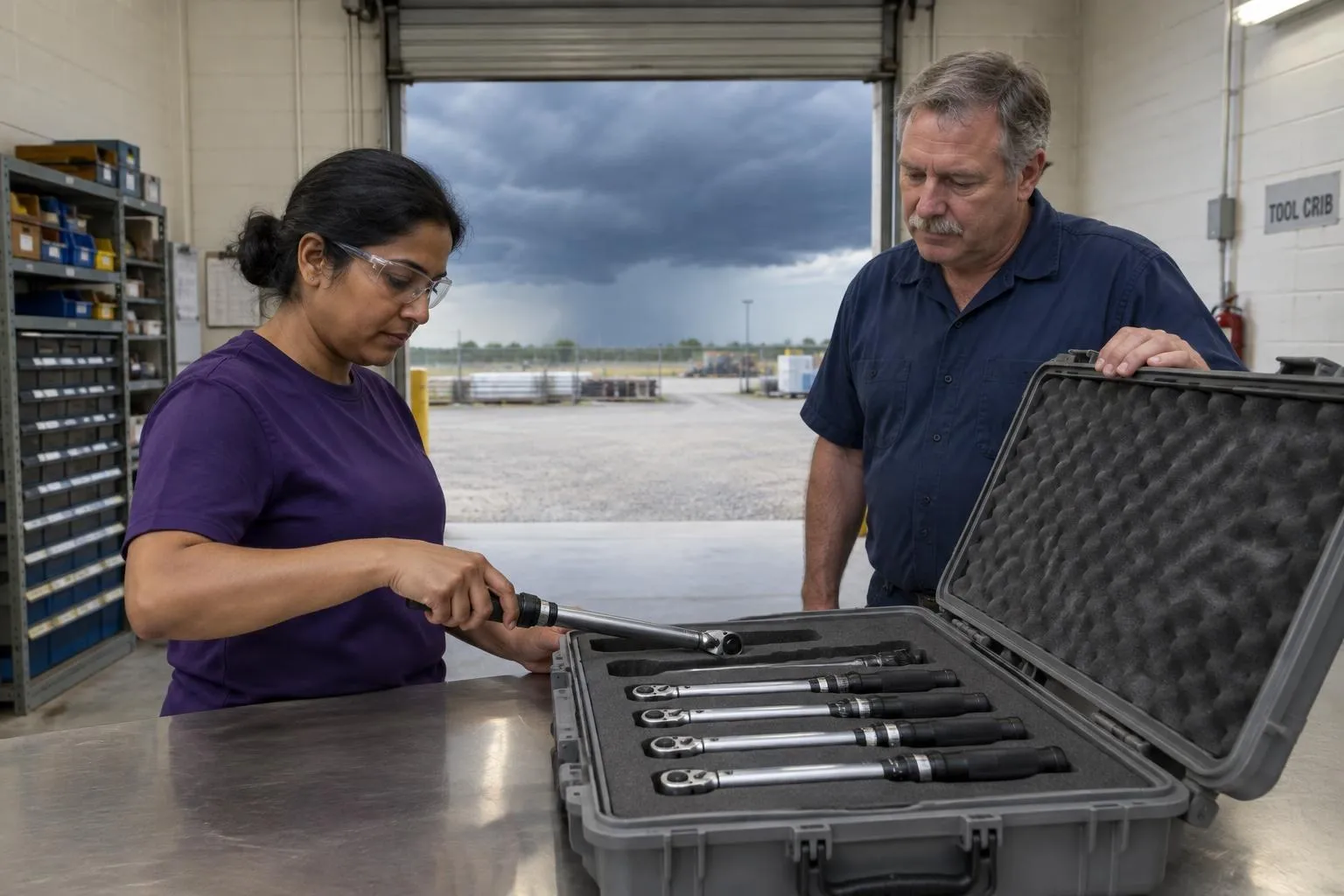
| Torque | Reference torque transducers, calibrated weights | Torque wrenches, drivers, sensors |
Where Things Go Wrong
The biggest real-world pain point isn’t accuracy drift — it’s tracking. Instruments go out for calibration and come back without anyone updating the internal database. A calibration sticker falls off. Someone swaps instruments between departments. Six months later, you’re in an audit and you can’t produce a certificate for a gauge that’s been in production for two years.
Good labs address this partly by providing digital certificate storage (some for 10+ years), but the internal tracking problem is yours to solve. A calibration management database — even a simple spreadsheet — that logs instrument ID, calibration due date, and certificate number is the minimum.
Pro Tip:When you send equipment for calibration, photograph the asset tag and the instrument serial number before it leaves your facility. Surprises at instrument return are rare but not unheard of, and a timestamped photo takes 10 seconds.
The other common challenge is turnaround time versus production needs. Standard lab turnaround runs 3–5 business days for most equipment. If you need faster, many labs offer expedited service — but plan for it. Pulling an instrument from production for calibration without a spare or a measurement plan creates downtime that costs more than the calibration itself.
Practical Bottom Line
If you’ve never hired a calibration lab before, start with one instrument — ideally something that feeds directly into a quality decision or regulatory submission. Send it to an ISO/IEC 17025 accredited lab, ask to see their scope certificate for the parameters you need, and read the certificate you get back. Look for: measurement uncertainty stated in the same units as the instrument, actual before/after readings (not just “pass”), and a reference standard ID with its own traceability documentation.
Once you’ve been through it once, the process demystifies fast.
For a broader overview of what to look for when selecting a provider, start with the Complete Guide to Calibration Laboratories. If you’re trying to figure out what accreditation status actually means for your audit requirements, that’s worth reading before you book anything.
The measurement is only as good as the reference behind it. Now you know what that reference actually looks like.
Done reading? Get quotes from calibration laboratorys near you.
Takes about a minute. Free, no obligation; providers reply to you directly.
Popular cities:
Nick built this directory to help quality teams find accredited calibration labs without wading through unaccredited shops that can’t support an ISO audit — a gap he discovered when sourcing calibration vendors for a manufacturing client whose instrument traceability chain failed a third-party audit.