Get free quotes from calibration services near you
Takes about a minute. Free, no obligation; providers reply to you directly.
A metrology manager I talked to last year told me she’d just sat through her third AI pitch in as many months. Each one promised to “revolutionize calibration.” Each one showed her a slick dashboard and a phrase she’d started to hate: fully automated compliance. She asked the vendor a simple question — “Can your system calibrate a torque wrench to NIST-traceable standards without a technician in the room?” The call got quiet fast.
That moment captures where the calibration industry actually stands with AI right now: lots of genuine capability, lots of overpromising, and a gap between the two that matters enormously for anyone making real decisions about accreditation, staffing, and equipment.
The Short Version:AI is genuinely transforming the administrative and scheduling side of calibration — cutting test cycles, eliminating paper, and catching drift before it causes problems. It is not replacing accredited laboratories or the human judgment required for high-stakes metrology work. The labs that thrive will be the ones that adopt AI as a force multiplier, not a headcount-reduction scheme.
Key Takeaways
- AI reduces test data requirements by up to 20x and accelerates test cycles by the same factor — but only for engineering simulation use cases, not formal NIST-traceable calibration
- ISO/IEC 17025 and ISO 10012 are evolving to accommodate Digital Calibration Certificates (DCCs) and AI-assisted uncertainty automation — accreditation bodies aren’t going away, they’re digitizing
- The GlueX physics experiment used AI to stabilize detector gain to within 5% over two weeks — real-world proof of AI’s value in complex, continuous calibration environments
- The honest answer: AI replaces tasks, not technicians — and definitely not accredited labs
What AI Actually Does Well in Calibration
Nobody tells you this when the vendor is pitching: the strongest AI applications in calibration right now have almost nothing to do with the physical measurement itself.
Predictive interval scheduling is probably the most mature use case. Traditional calibration runs on fixed calendar intervals — every 6 months, whether the instrument needs it or not. AI analyzes historical drift data and environmental factors to flag instruments that are trending toward out-of-tolerance before the scheduled date, and to safely extend intervals for stable, low-risk equipment. That’s not hype — it’s applied statistics on your existing calibration records.
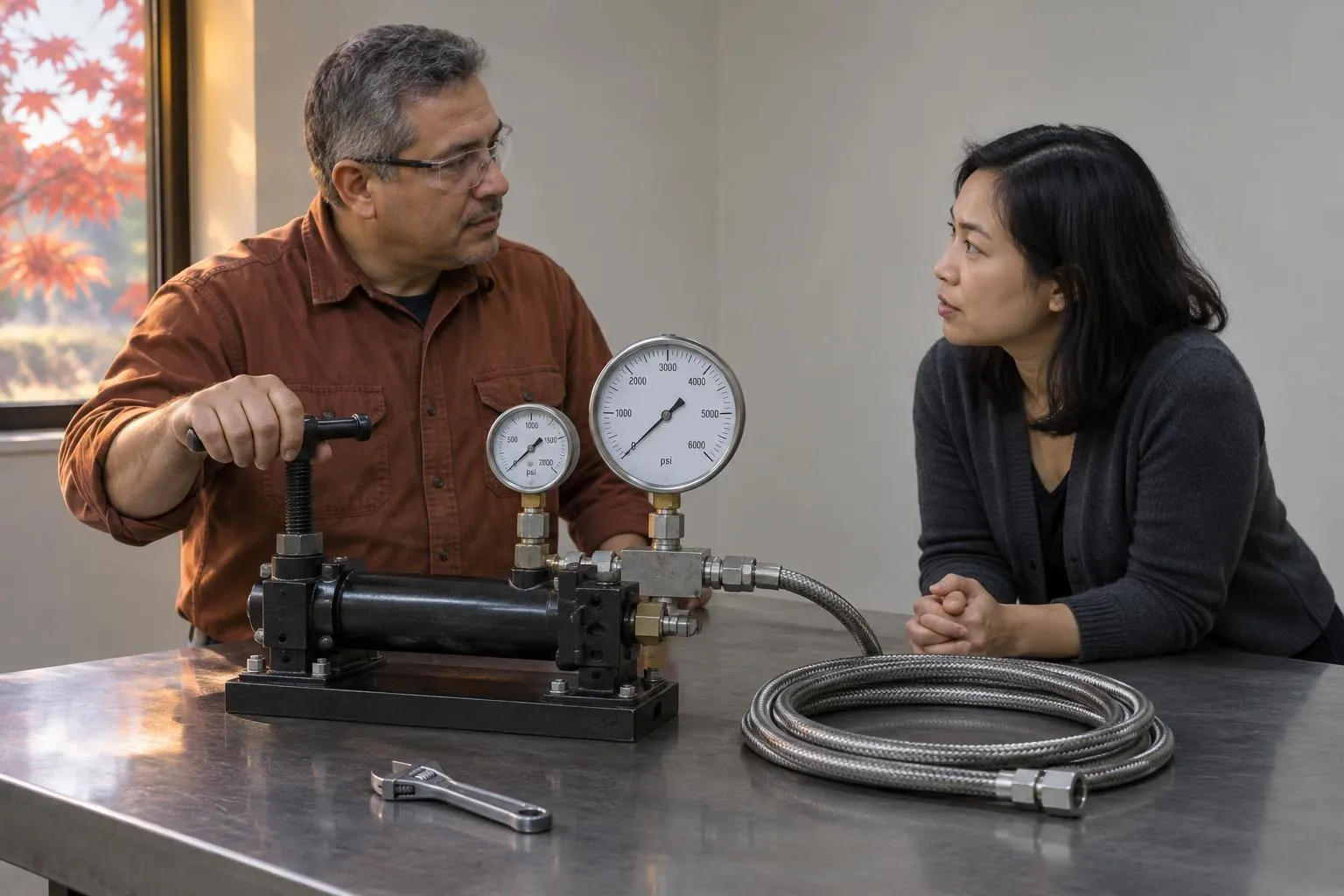
Anomaly detection is close behind. Fluke’s calibration software suite now uses AI to detect drift patterns that a human reviewing a spreadsheet would miss. In energy pipeline applications, pressure transmitters with IoT connectivity auto-upload results, and AI triggers work orders the moment drift trends cross a threshold. The technician still does the calibration — but they’re working from better intelligence.
Then there’s the virtual sensor and test cycle compression work from companies like Monolith AI. In partnership with automotive OEMs, they built AI models that achieve ±6% accuracy across operating ranges using 20 times less test data than traditional methods. Their AI-optimized test cycles are 20x faster than conventional approaches. That’s a real and significant capability — but it’s engineering model calibration, not accredited measurement calibration for a medical device manufacturer heading into an FDA audit.
Pro Tip:If you’re evaluating AI calibration tools, ask vendors to specify whether their accuracy claims apply to virtual/simulation environments or to NIST-traceable physical measurement. These are completely different contexts.
What AI Cannot Replace
Here’s where honest beats optimistic.
ISO/IEC 17025 accreditation requires human-authored uncertainty budgets, a qualified technical signatory, and direct traceability to national measurement standards. A2LA and NVLAP don’t award accreditation to algorithms. The audit requires a human being who can defend every measurement decision. That’s not regulatory inertia — it’s the actual structure of metrological traceability.
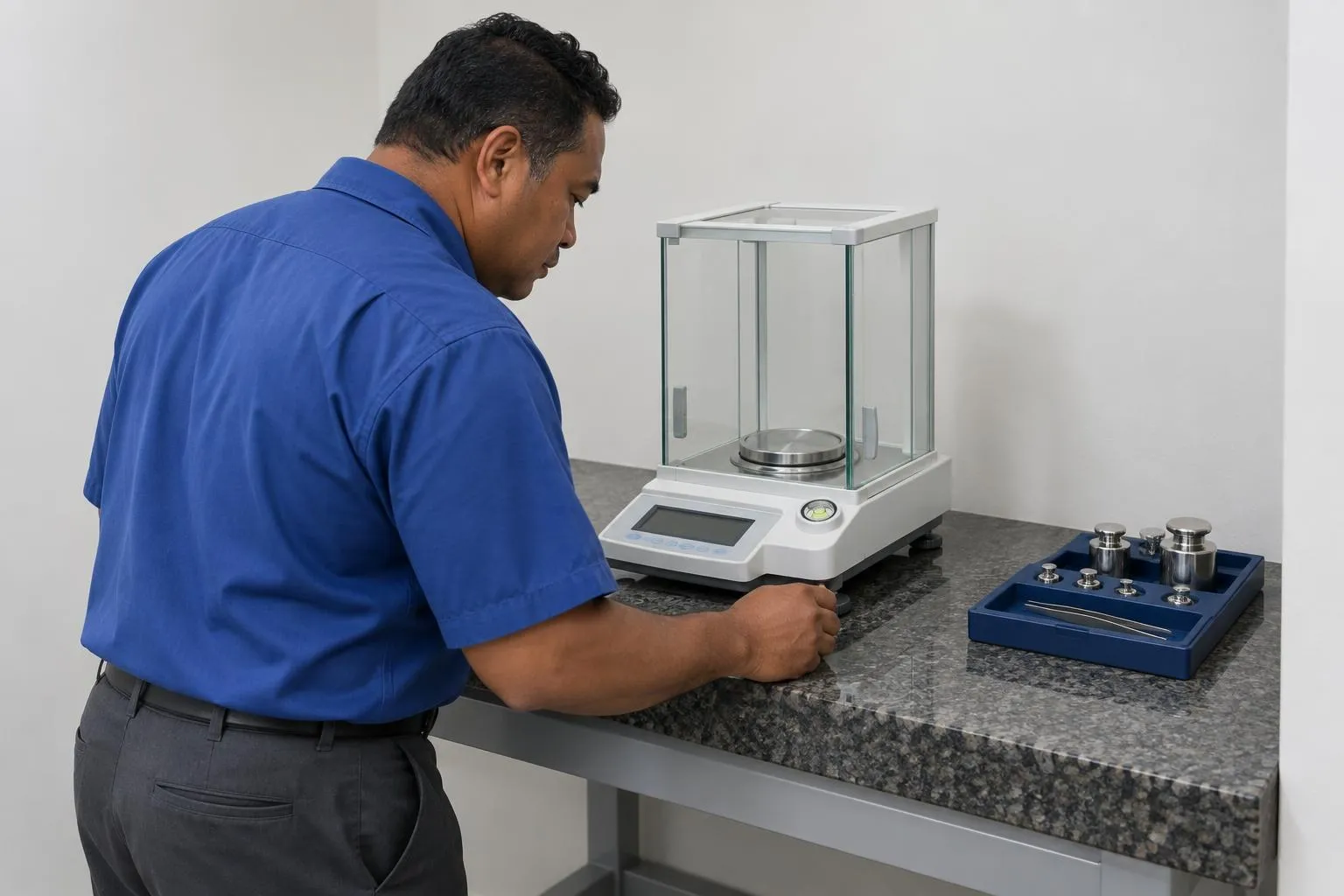
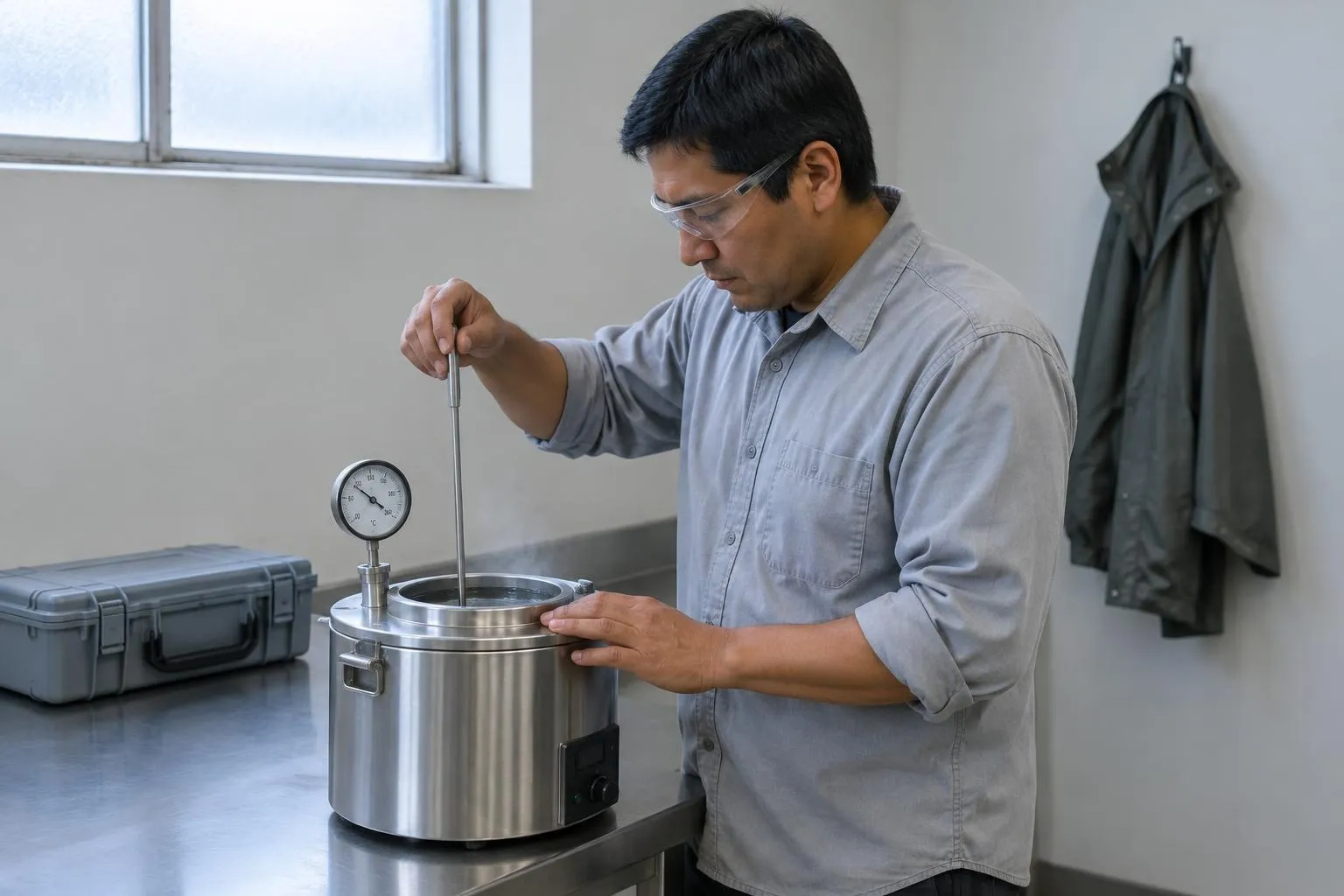
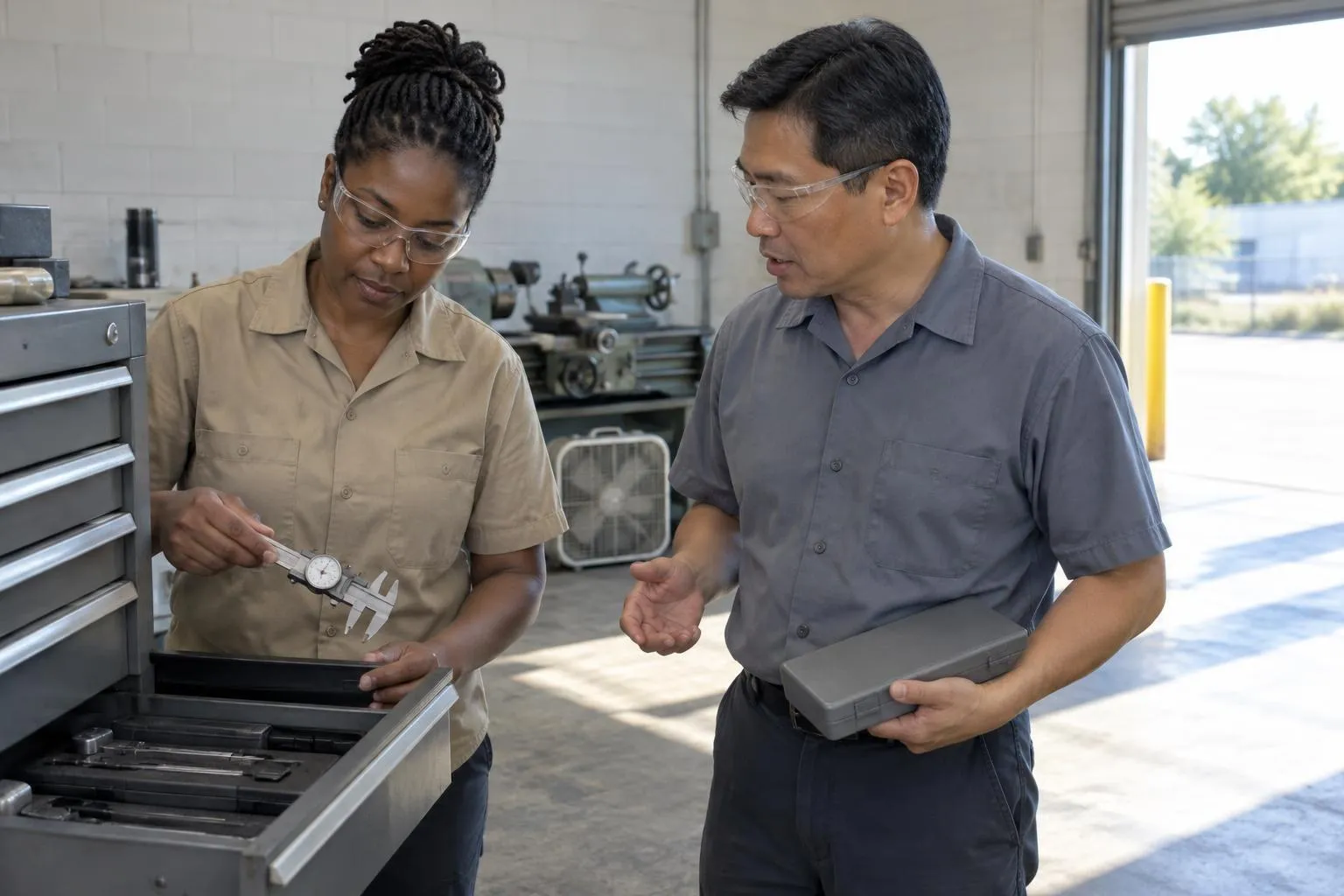
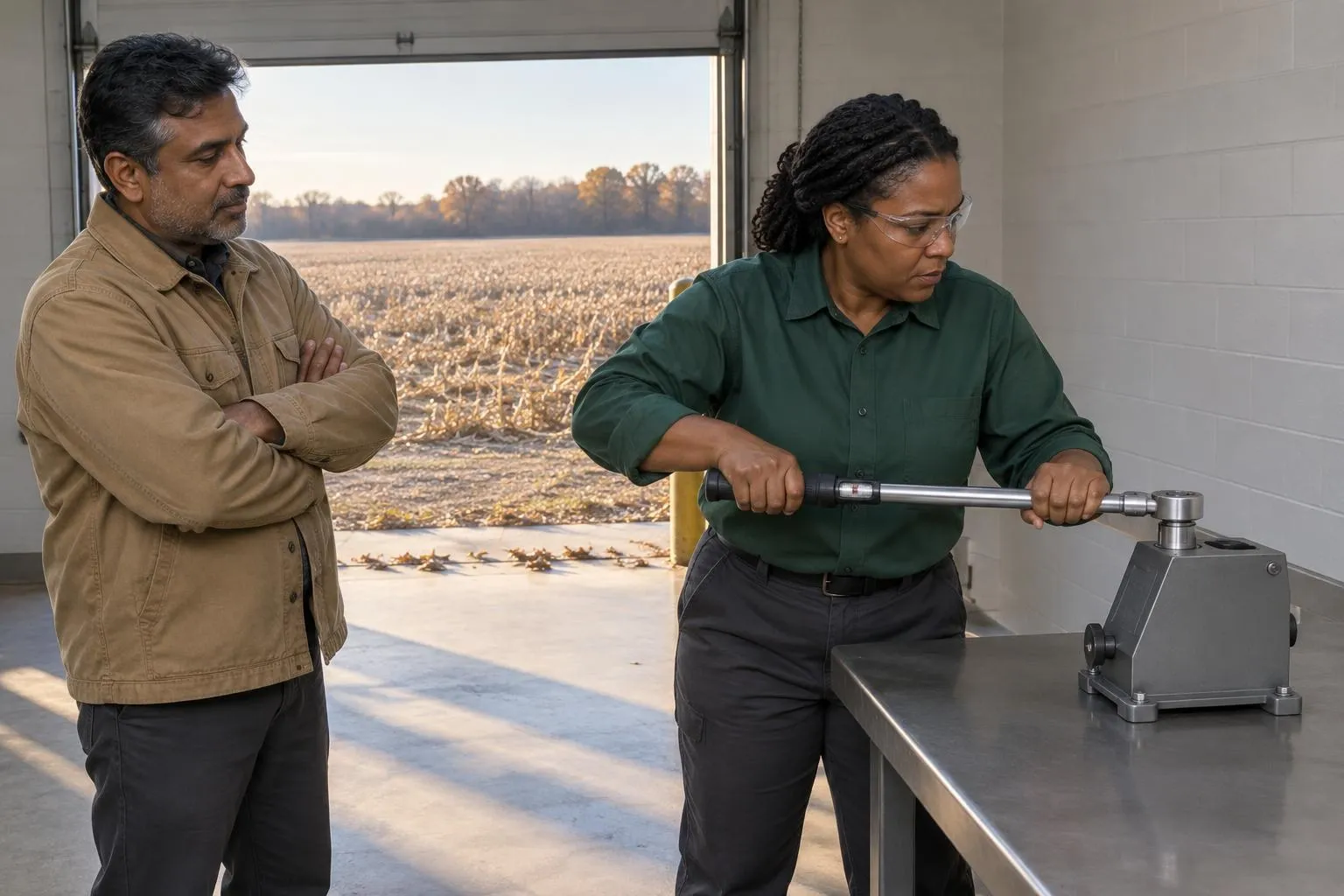
Physical artifacts need physical handling. A gage block set, a precision torque standard, a platinum resistance thermometer — these require environmental controls, careful handling, and trained hands. AI can schedule when they should be calibrated and flag anomalies in results. It cannot do the comparison.
Complex measurement uncertainty analysis for novel instrument types, unusual ranges, or regulatory submissions still requires metrology expertise. The AI can automate the routine math. It can’t navigate the judgment calls that come up when you’re calibrating something your lab hasn’t calibrated before.
Reality Check:The GlueX particle physics experiment deployed AI that autonomously adjusted high-voltage settings and generated calibration constants in near real-time, stabilizing detector gain to within 5% over two weeks. That’s genuinely impressive. It’s also a continuous monitoring application in a research environment — not a model for replacing accredited lab technicians handling customer instruments under ISO/IEC 17025.
The Tasks vs. Technicians Table
| Task | AI Can Handle | Still Needs Humans |
|---|---|---|
| Calibration interval scheduling | ✓ (predictive, risk-based) | Judgment on safety-critical items |
| Data entry and report generation | ✓ (fully automatable) | Sign-off by qualified signatory |
| Drift trend detection | ✓ (anomaly algorithms) | Root cause investigation |
| Uncertainty budget calculation (routine) | ✓ (templated cases) | Novel instrument types |
| Physical measurement comparison | ✗ | Always |
| NIST traceability chain documentation | Partial (DCC formatting) | Human review and accreditation |
| Customer technical consultations | ✗ | Always |
| Accreditation audit defense | ✗ | Always |
The pattern is consistent. AI handles the data-heavy, repetitive, pattern-matching work. Humans handle the physical, the novel, and the accountable.
The Digital Calibration Certificate Shift
The most underreported change happening right now is the move from paper certificates to Digital Calibration Certificates (DCCs). This is an ISO/IEC-backed standard enabling machine-to-machine transfer of calibration results — your CMM can receive a calibration result electronically and update its compensation tables automatically.
For labs, this means clients will increasingly expect structured digital outputs, not PDFs. AI plays a direct role here in formatting, transmitting, and validating DCC data. Labs that don’t invest in this infrastructure will face competitive pressure within the next few years, not because AI replaced them, but because their paper-based workflows became friction.
This is the real disruption story — not “AI replaces labs” but “labs that don’t modernize lose clients to labs that do.”
Practical Bottom Line
If you run or manage a calibration laboratory, three things are worth acting on now:
-
Audit your scheduling logic. If you’re running purely calendar-based intervals, you’re leaving money on the table (unnecessary recals) and carrying risk (missed drift events). AI-assisted interval optimization is mature enough to deploy today.
-
Get ahead of the DCC standard. Clients in aerospace and medical devices will start requesting structured digital certificates. Invest in the infrastructure before it’s a competitive disadvantage.
-
Stop worrying about replacement, start thinking about leverage. The labs winning right now are using AI to handle monitoring, reporting, and scheduling so that their senior technicians spend time on the complex, billable, differentiating work — not data entry.
The honest answer to “will AI replace calibration laboratories” is: no. But it will replace the labs that refuse to change how they work.
For a broader foundation on what calibration laboratories do and how to evaluate them, see The Complete Guide to Calibration Laboratories.
Done reading? Get quotes from calibration laboratorys near you.
Takes about a minute. Free, no obligation; providers reply to you directly.
Popular cities:
Nick built this directory to help quality teams find accredited calibration labs without wading through unaccredited shops that can’t support an ISO audit — a gap he discovered when sourcing calibration vendors for a manufacturing client whose instrument traceability chain failed a third-party audit.